hit tracker

Top Ad 728x90

Saturday, August 15, 2026

🚽Never flush the toilet after urinating: this is a big mistake

by


This may seem strange, or even contrary to our hygiene habits, but several experts say that it is not always necessary —or recommended— to flush the toilet after urinating. This common practice, which is often considered a cleanliness reflex, actually has ecological and health consequences which few people think about. Here's why.

💧 1. A considerable waste of water

Every time you flush, you use on average 6 to 9 liters of drinking water.
Over a day, this can represent tens of liters for a simple trip to the toilet.
However, in a context of water shortage globally, this daily gesture has a major ecological impact.

👉 By not flushing every small commission, a family of four can save up to 30,000 liters of water per year.

This is where the famous English saying comes from:

“If it's yellow, let it mellow. If it's brown, flush it down.”
(“If it's yellow, let it sit. If it's brown, flush the toilet.”)

🧫 2. A question of bacteria... but also of precautions

Many fear that not flushing the toilet will encourage the proliferation of bacteria or bad odors.
In reality, the urine of a healthy person is sterile : it does not contain dangerous germs.
Bad odors only appear when urine stagnates for a long time or when dehydrated (which makes it more concentrated).

To limit this:

TO READ MORE PLEASE SEE PAGE 2To limit this:

  • Always close the toilet lid.
  • Hunt only once or twice a day.
  • Clean the bowl regularly with white vinegar or baking soda.

This way you stay clean while saving water.

🌍 3. A gesture for the environment and the planet

The water used for each flush is drinking water, processed and expensive.
By wasting it unnecessarily, we increase the demand for treatment and energy.
Not flushing systematically is therefore a simple and effective ecological act to reduce its environmental footprint.

In certain regions of the world, this type of practice is already encouraged by local authorities or environmentalists — particularly in areas prone to drought.

⚠️ 4. Cases where you still have to flush the toilet

Of course, there are situations where it is better to flush the toilet:

  • After bowel movements (for obvious hygiene reasons).
  • If several people use the same toilet.
  • If the urine remains in the bowl for a long time or if it is particularly concentrated.

Common sense remains essential: it is not a question of abandoning hygiene, but to adapt your habits depending on the context.

🌱 Conclusion: a small gesture, a big impact

Not flushing after each urination does not mean neglecting cleanliness — on the contrary, it is one conscious and ecological choice.
It's a simple way to preserve natural resources while reducing domestic expenses.

Next time you go to the bathroom, remember:
Every flush saved, that is one more gesture for the planet. 🌍💧

o see someone’s true character, observe just these 2 things…. Details in the first comment

by


For much of our lives, we meet people who seem kind, dependable, or trustworthy—at least at first glance. Yet, as time passes, we sometimes discover that what we saw on the surface wasn’t the whole story. A person’s true character often hides behind smiles, polite greetings, and carefully chosen words.

But here’s the remarkable truth: you don’t always need years to see who someone really is. With the wisdom of experience—and by knowing what to watch for—you can understand a person’s true nature in just a matter of minutes.

Carl Jung, the Swiss psychiatrist whose groundbreaking ideas shaped modern psychology, once explained that character is revealed not in the moments when we are polished and prepared, but in the everyday situations when our guard is down. According to Jung, there are two small but powerful signs that can help us uncover a person’s real nature. These insights remain just as relevant today as they were decades ago, offering timeless lessons for relationships, self-awareness, and personal growth.
Why Small Moments Matter More Than Big Ones

read more in next pageIt’s easy to perform when life is going smoothly. Anyone can look patient when they aren’t being tested, or generous when others are watching. But real character is not about grand gestures or big declarations. It shows itself in the quiet details—the unguarded choices a person makes when there’s no audience, no reward, and no reason to pretend.

That’s why these two signs matter so deeply. They bypass appearances and words, cutting straight to the heart of who someone truly is.
1. How a Person Treats Those Who Can Offer Nothing in Return

One of the clearest indicators of character lies in how someone interacts with those who have no power over them. Think of the waiter at the restaurant, the cashier at the grocery store, the janitor cleaning the floors at night, or even a stranger asking for directions.

When a person shows kindness and respect to people in these roles, it reflects a core of empathy and integrity. It shows they don’t measure another person’s value by status or wealth, but by shared humanity.
On the other hand, when someone dismisses, insults, or ignores those they consider “beneath” them, it often reveals arrogance, insecurity, or a lack of moral depth. No matter how charming that person may appear in social circles, their treatment of the powerless tells the real story.

Older generations know this instinctively. Many of us were taught by parents or grandparents that true respect is universal. You don’t pick and choose who deserves kindness—it is offered to everyone, especially those who may not be able to give you anything back.
2. How a Person Handles Frustration and Adversity

The second powerful clue lies in how people behave when things go wrong. Life doesn’t always go according to plan—there are delays, failures, and setbacks that test us in ways comfort never could.

Do they lash out when the line is too long at the pharmacy? Do they blame the clerk when their order gets mixed up? Do they snap at loved ones when they’re tired?

Or, instead, do they stay calm, breathe, and find a constructive way forward? Do they show patience with others, even when stressed themselves? Do they acknowledge mistakes instead of shifting blame?

read more in next page
Jung reminded us that character isn’t revealed in times of ease—it is revealed in times of crisis. A person’s ability to stay balanced in frustration speaks volumes about their emotional maturity, humility, and self-control.

For many older adults, this rings especially true. Life has taught us that storms will always come. The question isn’t whether someone has faced challenges, but how they carried themselves through them. That, more than anything, separates resilience from fragility.
Other Subtle Clues That Speak Volumes

While these two main signs provide the strongest window into character, there are other everyday behaviors worth noticing. Over time, these small details build a more complete picture of who someone really is.
Their Sense of Humor

Laughter is revealing. The jokes someone makes—or even the jokes they laugh at—can point to their deeper feelings. Compassionate humor, which uplifts and connects, often reflects warmth and security. Sarcastic or cutting humor, on the other hand, may hint at bitterness, insecurity, or hidden hostility.
How They Speak About Others

Pay close attention to how people talk about those who aren’t in the room. Do they constantly gossip, criticize, or judge? Or do they show understanding, giving others the benefit of the doubt? People who habitually tear others down are often expressing dissatisfaction with themselves.
How Well They Listen

Genuine listening is a rare gift. A person who listens without interrupting or dominating the conversation demonstrates respect and emotional awareness. Listening is not simply about hearing words—it’s about valuing another’s presence.
How They Use Power

Perhaps one of the most revealing tests of all is how someone behaves when they are in a position of authority. Whether it’s managing employees, leading a group project, or simply being the “decision-maker” in the family, power can bring out either generosity or cruelty. Those who remain fair, humble, and considerate when in charge show that their values are rooted in integrity, not ego.
Why These Lessons Matter Now

In today’s world of social media, image often takes precedence over reality. People curate their lives with perfect photos and polished words. But character cannot be filtered or staged. It appears in how we treat others when no one is watching, and in how we react when life doesn’t go our way.

read more in next page
For those of us in our later years, these truths feel familiar. We’ve had decades to observe people in both their best and worst moments. Many of us can recall friendships or relationships that seemed solid until adversity revealed something different. And many of us have also seen kindness shine in unexpected places—from strangers, neighbors, or even casual acquaintances who showed decency when they didn’t have to.
The Wisdom of Experience

As we grow older, we learn to trust these quiet signals more than polished appearances. We realize that a person’s true worth isn’t measured in what they say about themselves, but in the choices they make every day.

Carl Jung’s timeless advice—look at how someone treats those who can give nothing back, and how they handle frustration—remains a compass for anyone seeking to build meaningful, trustworthy relationships.

And perhaps, it is also a reminder for ourselves. Each day, in small ways, we are revealing our own character too. Whether we show patience at the doctor’s office, gratitude to a cashier, or kindness to a neighbor, we are living examples of the values we hold most dear.

At its heart, character is about love, humility, and resilience. It is not built overnight, nor is it revealed in speeches or titles. It shines quietly, in patience shown to a stranger, in kindness offered with no expectation, and in the calm that steadies us through life’s inevitable storms.

For those who wish to truly understand others—and themselves—remember Jung’s wisdom: don’t look only at what people say or show. Look at what they do when no one is watching, and how they behave when the road gets hard.

That is where you’ll see the truth.

Why Your Nail Clipper Has That Small Round Hole and Why It Still Matters Today

by


Most of us reach for a nail clipper without giving it a second thought. It sits quietly in a bathroom drawer, a travel kit, or a bedside table, ready when needed. Yet tucked into its familiar metal shape is a tiny detail many people notice but rarely question. That small round hole near the lever looks simple, almost decorative. In reality, it reflects thoughtful nail clipper design that has stood the test of time.

For older adults especially, everyday tools often tell quiet stories. They remind us of an era when items were built to last, designed with purpose rather than flash. The hole in a nail clipper is one of those understated features. It solves practical problems, improves usability, and connects modern grooming tools to a long history of personal care.

Understanding why that hole exists offers more than trivia. It gives insight into how small design choices can make daily routines easier, more organized, and more dependable.A Simple Solution to a Common Problem

One of the most practical reasons for the hole in a nail clipper is portability. Nail clippers are small, smooth, and easy to misplace. Many people have owned more than one simply because the previous one disappeared into a drawer or vanished during travel.

ADVERTISEMENT

Discover more
Medical Literature & Resources
Biological Sciences
Visual Art & Design
See next page:
ADVERTISEMENT
The hole provides a secure attachment point. A simple ring, string, or hook allows the clipper to be fastened to a keychain, grooming kit, or hanging organizer. This keeps it visible and accessible when needed.

For people who value order, especially those downsizing or simplifying their homes, this feature is surprisingly helpful. Instead of searching through multiple drawers, the clipper stays right where it belongs. It is a small design detail that supports calm, organized living.

Making Nail Care Easier on the Hands

As we age, grip strength and finger flexibility can change. Tasks that once felt effortless may require a bit more care. The hole in a nail clipper can quietly assist with this.

Some users thread a small loop through the hole to create a better grip. Others use it as a leverage point, allowing more control when pressing the lever. This can make trimming nails more comfortable and less stressful on the hands.

This aspect of nail clipper design is rarely advertised, yet it reflects thoughtful consideration for a wide range of users. A tool that adapts to different needs remains useful across decades of life.

Keeping Tools Together and Organized

The secret to impeccable laundry is hidden in your washing machine: the common mistake of the laundry bin

by


Does your laundry come out of the machine without this expected freshness? The solution often lies in the neglected maintenance of an essential compartment. Find out how to correct this mistake for brilliant results with every wash.

The laundry bin, this great forgotten part of maintenance

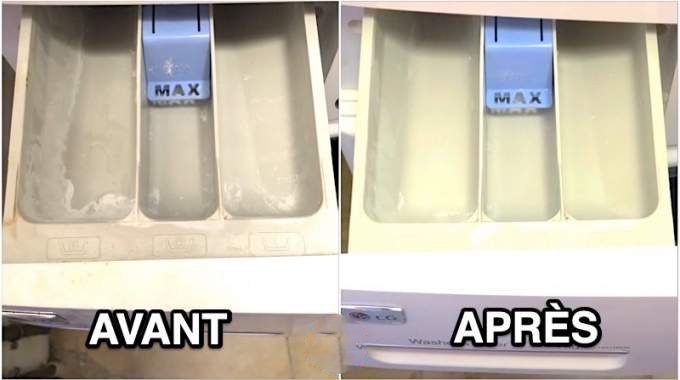
We pour the detergent into it mechanically, without thinking too much about it. However, the laundry tray plays an essential role: it doses and distributes the products at the right time in the cycle. Over time, detergent, fabric softener and limescale residue accumulate there. Result: the detergent circulates poorly, odors appear and the laundry comes out less clean.

Worse yet, a dirty bin can become an ideal breeding ground for deposits and bad odors, which then transfer to your clothes.

How often should you clean the laundry bin?

The good news is that this cleaning does not require any specific equipment or a lot of time. The ideal is to do this every two to four weeks, depending on how often you use your machine. If you wash often at low temperatures or use fabric softener regularly, more frequent cleaning is recommended.

It's one of those small maintenance actions that makes a huge difference in the long run.

How to clean the laundry bin effectively

  1. Start by removing the drawer completely. Most washing machines have a small tab or button in the center of the bin: press gently while pulling toward you.
  2. Once out, observe it: the surprise is often there.
  3. Clean each compartment with a sponge or cloth.
  4. For difficult corners, an old toothbrush is ideal. If the deposits are well encrusted, let the tray soak in hot water for fifteen to twenty minutes, possibly with a little white vinegar.
  5. Rinse thoroughly, let air dry, then replace it.

Often forgotten tip: also remember to clean the groove in which the drawer fits. Residues frequently accumulate there and prevent laundry from draining properly.

Are you really using the right compartment?

Another very common mistake: getting the wrong compartment. Most laundry detergent trays have three sections:

  • the pre-wash compartment (often marked "I"),
  • the main washing compartment (marked "II"),
  • the softener compartment (symbolized by a flower).

Liquid or powder detergent should be placed in the main compartment. The softener, for its part, is released only during the final rinse thanks to its dedicated compartment.

Pouring detergent directly into the drum —unless specifically directed by the manufacturer— can reduce its effectiveness and leave residue on clothing.

Beware of overdose, enemy of clean laundry

We often think that by using more detergent, the laundry will be cleaner. In reality, it's the opposite. An overdose leaves residue on textiles, promotes bad odors and clogs the bin and the machine more quickly. Always respect the maximum levels indicated and adapt the quantity to the load and the degree of dirt.

A laundry that smells clean also start with the right dosage.

A small gesture, big effects

Cleaning the laundry tray regularly and using each compartment correctly immediately improves the freshness of the laundry, but also the longevity of your machine. Your clothes regain a truly clean feeling, without persistent odors or unpleasant residue.

It only takes a few minutes a month, but the effect is stunning — especially when you realize that the problem came from such a simple detail. Maintain your washing machine often involves these discreet, but essential gestures.

Sometimes you don't have to change machines, just change a habit.

🚗✨ The homemade secret to restore shine to matte headlights without spending more 😮🔍 A simple everyday trick can help clean and improv

by


Matte headlights can quickly make a car, even a well-maintained one, look old. A home remedy of lemon and bicarbonate circulates widely online to restore their shine, but its actual effectiveness is debated.

Matte headlights can instantly make a car, even a perfectly maintained one, look tired. Many drivers are therefore looking for a quick, easy and, above all, economical solution to restore shine. And in recent months, a home remedy of lemon and bicarbonate has generated a lot of attention on social media. Simple, cheap and impressive at first glance, this method fascinates as much as it shares opinions. Because behind the spectacular videos is a reality that is often much more nuanced.

Why do headlights become matte over time?

Over the years, headlights naturally lose their transparency. Sun, rain, heat, pollution and dust gradually damage their surface.

Most modern models are made of polycarbonate, a strong material that is sensitive to external damage. To protect them, a special coating is applied to the factory. The problem is that this protection gradually wears away over time.

The result: the headlights turn yellow, become opaque and scatter the light less efficiently. An aesthetic detail, certainly, but also an important factor for safety and driving comfort, especially at night or in bad weather.

The lemon and bicarbonate trick that has had the internet fascinated

It's a method that almost resembles a grandmother's recipe, but for cars. The principle is simple: mix bicarbonate with lemon to get a slightly abrasive paste.

Bicarbonate helps remove impurities and superficial marks, while lemon helps dissolve some greasy dirt. When the mixture is carefully applied to the headlight with a microfiber cloth or soft sponge, it can effectively improve its appearance in just a few minutes.

And it is precisely this immediate result that explains its viral success. Impressive before/after pictures, negligible cost and ingredients already in the kitchen: it's hard not to be tempted.

But be aware that this improvement often remains superficial and temporary.

Which viral videos often forget to mention

A lot of online content suggests that this method fully “repairs” headlights. In reality, it mainly functions as a deep cleaning.

It's a bit like temporarily reviving an old parquet floor without applying new protection afterwards: the effect may be successful at first, but it doesn't necessarily last long.

Without proper protection, headlights often become dull again after a few days or weeks, depending on their original condition and exposure to the sun.

Another thing that is rarely mentioned: too hard rubbing can damage the surface further. Some use highly abrasive sponges or inappropriate tools in the belief that they will speed up the process. However, micro-scratches can occur and further reduce the quality of light scattering.

The key is therefore gentleness and moderation. After cleaning, it is also advisable to rinse thoroughly and then wipe the headlight with a clean cloth to avoid any remaining marks.

The most durable solutions to restore clear headlights

For slight clouding or some superficial marks, this home remedy may be sufficient for sporadic use. It allows you to quickly refresh the look of your headlights without spending a fortune.

However, when opacity is significant, specialists generally use a much more comprehensive method. Progressive grinding with different grain sizes, precise polishing and then the application of UV protection: each step plays a decisive role in the durability of the result and must be carried out in this order to avoid damaging the plastic.

Commercially available restoration kits are also extremely popular. They often contain several levels of surface treatment as well as a protective layer specially designed for vehicle materials.

Another simple but effective tip: parking in the shade as much as possible and regularly cleaning the headlights helps slow down their aging. As with the skin in summer, the sun is still their biggest enemy.

Why are these home remedies so popular today?

If these methods are so appealing, it is also because they respond to a very current desire: to repair rather than replace.

Maintaining your own car, saving on small expenses and learning a few simple techniques gives many drivers peace of mind. And it has to be said that there is something very satisfying about giving your vehicle a new life with minimal effort.

The most important thing is simply to keep expectations realistic and choose the right solution based on the actual condition of the headlights.

Sometimes the best tips are those that combine economy, common sense and regular  car maintenance.

The 4 Essential Vitamins That All Older Adults Need…See more

by


4 Essential Vitamins Every Older Adult Should Know About

As we age, our bodies absorb and use nutrients less efficiently, making certain vitamins especially important for maintaining good health. A balanced diet is the best source of these nutrients, but in some cases, supplements may also be beneficial under medical guidance.

1. Vitamin D – For Strong Bones and Immunity

Vitamin D helps the body absorb calcium, supports bone health, strengthens muscles, and plays an important role in the immune system.

Why is it important for older adults?

As people age, the skin produces less vitamin D from sunlight, increasing the risk of deficiency, osteoporosis, and fractures.

Natural Sources

  • Sunlight (15–30 minutes daily, depending on skin type and local conditions)
  • Fatty fish such as salmon and sardines
  • Egg yolks
  • Fortified milk and dairy products

Supplementation

Many adults may benefit from 800–2,000 IU per day, but the appropriate dose should be determined by a healthcare professional.

2. Vitamin B12 – For Brain Function and Energy

Vitamin B12 is essential for healthy nerves, red blood cell production, and cognitive function. A deficiency can lead to fatigue, memory problems, and neurological symptoms.

Why is it important for older adults?

With age, the stomach often produces less acid, making it harder to absorb vitamin B12 from food.

Natural Sources

  • Red and white meat
  • Fish
  • Eggs
  • Milk, cheese, and other dairy products

Supplementation

If a deficiency is diagnosed, vitamin B12 supplements or injections may be recommended by a healthcare provider.


3. Vitamin C – For Immunity and Healthy Skin

Vitamin C supports the immune system, promotes wound healing, improves iron absorption, and acts as a powerful antioxidant that helps protect cells from damage.

Why is it important for older adults?

It helps maintain a healthy immune system while protecting tissues from oxidative stress associated with aging.

Natural Sources

  • Oranges, lemons, and other citrus fruits
  • Kiwis, strawberries, and mangoes
  • Bell peppers
  • Broccoli
  • Spinach

Supplementation

Up to 500 mg per day may be beneficial for some people, although obtaining vitamin C through fruits and vegetables is generally preferred.

4. Vitamin E – For Healthy Skin, Eyes, and Memory

Vitamin E is a powerful antioxidant that helps protect cells from premature aging while supporting eye health and cognitive function.

Why is it important for older adults?

It may help protect brain function, improve circulation, and support healthy skin.

Natural Sources

  • Almonds and walnuts
  • Sunflower seeds
  • Olive oil and sunflower oil
  • Spinach
  • Avocados

Supplementation

Most people can meet their needs through a balanced diet. In some cases, a healthcare professional may recommend 100–400 IU per day.


Final Recommendation

Before taking any vitamin supplement, consult a doctor or registered dietitian. While supplements can be helpful, excessive amounts of certain vitamins may cause unwanted side effects.

The best strategy for healthy aging is to maintain a balanced diet, stay physically active, drink enough water, and have regular health checkups. It's never too late to invest in your health and well-being.

He Came Back Worth Millions for the Girl Who Fed Him Through a Fence

by


Every morning, Isaiah opened the same locked drawer.

Inside was a small glass frame lined with black velvet.

Resting inside it was half of a faded red ribbon.

The fabric had lost most of its color over the years, but to Isaiah, it was worth more than anything he owned.

He was now a wealthy businessman, a man whose company was valued in the millions. People called him disciplined, brilliant, and impossible to read.

But every morning, he looked at that ribbon and asked the same silent question.

Where are you?

The Boy at the Fence

Before Isaiah had money, success, or even a permanent home, he was a skinny nine-year-old boy standing outside the fence of Lincoln Elementary on Chicago’s South Side.

His mother was working temporary cleaning jobs after they had lost their apartment.

For a while, their life was made of shelters, borrowed couches, bus rides, and one broken duffel bag.

Isaiah was not enrolled at the school.

But some afternoons, his mother left him near the schoolyard because it was safer than leaving him alone elsewhere.

That was where Victoria Hayes first saw him.

The Girl With the Red Ribbon

Victoria was nine years old, small for her age, with braids tied back by a bright red ribbon.

Her own family did not have much.

Some nights, dinner at her apartment was toast, canned beans, or whatever her mother could stretch from the pantry.

School lunch mattered to her.

It was not just food.

It was security.

But one windy afternoon, she saw Isaiah standing at the fence, staring not at her face, but at the sandwich in her hand.

He was trying not to look hungry.

That made it worse.

Victoria walked over and pushed her sandwich through a small opening near the bottom of the fence.

“Take it,” she said.

Isaiah did.

He ate quickly at first, then slowed down, embarrassed by his own hunger.

Before the bell rang, she gave him her apple too.

Six Months of Kindness

The next day, Isaiah was there again.

So was Victoria.

For six months, she brought him food.

Some days it was half her sandwich.

Some days it was all of it.

Sometimes she went hungry so he could eat.

When her mother noticed Victoria coming home weak and starving, the truth finally came out.

Victoria expected anger.

Instead, her mother quietly packed two smaller sandwiches the next morning.

From then on, the kindness belonged to both of themA Promise at the Fence

By spring, Isaiah and his mother had to leave Chicago.

His mother had found work in Indianapolis, and a church helped pay for their bus tickets.

Isaiah came to the fence one last time.

“I won’t always be like this,” he told Victoria.

“Like what?” she asked.

“Poor.”

Victoria laughed softly, not to be cruel, but because children make impossible promises with complete seriousness.

“I’ll come back,” Isaiah said. “When I’m rich, I’ll marry you.”

Victoria smiled.

Then she untied the red ribbon from her braid, tore it in half, and tied one piece around his wrist.

“Don’t forget, then,” she said.

He never did.

Twenty-Two Years Later

Twenty-two years passed.

Isaiah became rich.

Not just comfortable.

Rich.

His company, Mitchell Urban Holdings, bought and redeveloped properties across the city.

He lived in a penthouse.

He had employees, investors, and board meetings.

But he still had half of a red ribbon in a locked drawer.

For years, he hired investigators to find Victoria Hayes.

They searched records, old addresses, school files, and public databases.

Nothing led to her.

His business partner finally told him what others were afraid to say.

“Maybe she moved on. Maybe she doesn’t want to be found.”

Isaiah’s face hardened.

“Don’t decide what she wants for her.”Returning to Lincoln Elementary

One afternoon, Isaiah stopped searching like a businessman and started searching like the boy he used to be.

He drove back to Lincoln Elementary.

The building was closed now.

The paint was peeling. Weeds grew through the cracked pavement. The playground looked smaller than he remembered.

He stood beside the old fence.

Then an older man in a maintenance jacket approached.

His name patch read Barnes.

Isaiah asked if he remembered a girl named Victoria Hayes.

Mr. Barnes stared at him.

“The little girl with the red ribbons?” he asked.

Isaiah forgot how to breathe.

The Clue

Mr. Barnes remembered Victoria.

He remembered the quiet girl who shared her lunch.

He remembered the boy outside the fence too.

“She didn’t have an easy life,” he said. “But she had a good heart.”

He told Isaiah that Victoria’s mother had once worked at a laundromat nearby.

The building was still there, though the old owner had sold it years ago.

Isaiah went there immediately.

The laundromat was smaller than he expected.

Behind the counter stood a woman with tired eyes and silver in her hair.

When Isaiah asked about Victoria Hayes, the woman studied him carefully.

Then she said, “You’re the boy from the fence.”Finding Victoria

Victoria was no longer a little girl with red ribbons.

She was a grown woman working as a school counselor.

She helped children who reminded her of the boy she once fed through a fence.

When Isaiah finally saw her, he almost lost the words he had carried for more than two decades.

She looked at him for a long moment.

Then her eyes dropped to his hand.

He was holding the framed ribbon.

Victoria covered her mouth.

“You kept it,” she whispered.

Isaiah nodded.

“Every day.”

What Money Could Not Buy

Isaiah had imagined this moment a thousand times.

He had thought he would arrive with answers, wealth, and gratitude big enough to repay what she had done.

But standing in front of Victoria, he understood something simple.

You cannot repay a kindness like that.

You can only honor it.

He told her everything.

How he had never forgotten.

How her sandwich had meant more than food.

How her kindness had made him believe his life could still become something.

Victoria listened quietly.

Then she told him the truth.

She had never forgotten either.A Different Kind of Promise

Isaiah did not ask her to marry him that day.

Life was no longer a childhood promise made through a fence.

But he did ask for time.

Time to know her again.

Time to thank her properly.

Time to become someone worthy of the memory he had carried.

Victoria smiled.

This time, she did not laugh.

“I think we can start with coffee,” she said.

And for the first time in years, Isaiah felt the echo inside him go quiet.

Final Thoughts

Sometimes the smallest acts of kindness become the reason someone survives long enough to build a new life.

Victoria gave Isaiah food when she barely had enough for herself.

Isaiah carried that kindness for twenty-two years.

Money changed his life.

But a little girl with a red ribbon changed his heart.

And some promises, even the ones made by hungry children at a fence, are never truly forgotten.