hit tracker

Top Ad 728x90

Saturday, August 22, 2026

What Does This Dinner Still Need? The Internet Can’t Agree!...see more

by


  • This photo has gone viral because it asks a simple question with endless possible answers:

“What does this dinner still need?”

The plate features a steak, lobster tail, shrimp, asparagus, corn on the cob, and sliced potatoes—but everything appears to be very heavily charred, with many items looking almost completely black.

As expected, the internet has had a field day with funny responses. Here are some of the most popular answers:

Of course, if the dark appearance is simply due to lighting or a blackened seasoning style, the meal may still be edible. But based on the image alone, it’s understandable why many viewers joke that it’s been cooked far beyond well-done.

 Final Answer

IF u see it ruun “The Red-Fanged Night Hunter: Meet the Spider That Hunts Without a Web...See more”

by


 When most people think of spiders hunting for food, they imagine delicate webs stretched between trees, corners of buildings, or blades of grass, waiting for an unsuspecting insect to become trapped. But not all spiders rely on webs to survive. Some have developed remarkable hunting techniques that depend on speed, patience, and specialized adaptations.

One of the most fascinating examples is the group of spiders known as jumping spiders. Unlike web-building spiders, these tiny predators actively search for their prey and use their incredible vision and athletic abilities to hunt.

A Predator That Stalks Instead of Traps

Jumping spiders do not sit in a web waiting for dinner to arrive. Instead, they move through their environment like miniature hunters, carefully observing their surroundings before making a move.

Their large front-facing eyes give them some of the best vision among spiders. They can detect movement, judge distances, and track potential prey with surprising accuracy. Once they identify a target, they slowly approach before launching a precise jump.

The Perfect Leap

Despite their small size, jumping spiders are capable of impressive jumps many times the length of their own bodies. Before taking off, they attach a safety line of silk to the surface beneath them. This “lifeline” helps prevent dangerous falls and allows them to recover if a jump goes wrong.

Their jumps are not random. These spiders calculate distance and timing carefully, allowing them to land directly on insects such as flies, moths, and other small creatures.

Hunting With Intelligence and Precision

What makes these spiders especially interesting is their behavior. Researchers have found that jumping spiders can display complex hunting strategies, including planning routes around obstacles and adjusting their approach based on the movement of their prey.

Rather than relying on a passive trap, they use awareness and decision-making to increase their chances of success. Their hunting style resembles that of larger visual predators, even though they are only a few millimeters long.

Silk Still Plays an Important Role

Although they do not build traditional prey-catching webs, jumping spiders still use silk in many ways. They create shelters, protect their eggs, and leave safety trails while moving. Silk remains an essential tool—it is simply used differently from the way web-building spiders use it.

Nature’s Tiny Acrobat

The hunting strategy of web-free spiders is a reminder of how diverse survival methods can be in the natural world. While some spiders depend on carefully designed webs, others rely on vision, movement, and precision.

These tiny hunters demonstrate that success in nature does not always come from waiting for opportunity. Sometimes, it comes from actively seeking it out with skill and strategy.


What Is The Normal Blood Pressure For Each Age link in comments 👇⬇️👇⬇️👇⬇️👇⬇️

by


Blood pressure isn’t just a number your doctor checks at your annual visit — it’s a vital window into your heart’s health. And as you age, that number becomes more important than ever.

Understanding how blood pressure evolves over time, and what’s considered healthy for your age group, can help you take proactive steps to protect yourself from serious conditions like heart disease, stroke, and kidney issues.

Why Blood Pressure Matters

Blood pressure is the force of blood pushing against the walls of your arteries as your heart pumps it through your body. It’s one of the most telling indicators of your cardiovascular health — and a key player in identifying risks before they become crises.

While the ideal blood pressure is often cited as around 120/80 mm Hg, what’s considered “normal” can shift slightly based on age, health history, and other individual factors.

For most people, the following is a guide.

Bl00d pressureSystolic (top number) mm HgDiastolic (bottom number) mm Hg
LowLess than 90Less than 60
OptimalLess than 120Less than 80
Normal120–12980–84
Normal to high130–13985–89
HighGreater than 140Greater than 90

Around 120/80 mm Hg is often considered a typical blood pressure reading.

Below is the average bl00d pressure for children and teens:

AgeSystolic (top number) mm HgDiastolic (bottom number) mm Hg
Newborns up to 1 month60–9020–60
Infants87–10553–66
Toddlers95–10553–66
Preschoolers95–11056–70
School-aged children97–11257–71
Adolescents112–12866–80

In adulthood, the average bl00d pressures by age and gender are:

AgeWomenMen
18–39 years110/68 mm Hg119/70 mm Hg
40–59 years122/74 mm Hg124/77 mm Hg
60+ years139/68 mm Hg133/69 mm Hg

How Aging Affects Blood Pressure

As you get older, the chances of developing high blood pressure (hypertension) increase significantly. Here’s why:

  • Stiffer arteries: With age, your arteries lose some of their elasticity. This makes it harder for blood to flow smoothly, which raises your pressure.
  • Plaque buildup: Over time, fatty deposits can accumulate in blood vessels, further restricting flow and increasing pressure.
  • Hormonal and kidney changes: Aging can alter how the body regulates fluid and salt, both of which impact blood pressure.

These changes make high blood pressure one of the leading risk factors for heart attacks, strokes, and vascular dementia in older adults.

8 Reasons Why Adding Baking Soda to Your Toilet Tank Is a Must-Do Trick

by


Soda 1

Maintaining a clean and efficient toilet is essential for every household, yet many people overlook simple solutions that are already sitting in their kitchen.

One of the most effective—and underrated—options is baking soda.

This common household ingredient is far more than just a baking essential. When added to your toilet tank, it can improve cleanliness, reduce odors, and even extend the lifespan of your plumbing system.

Here’s why adding baking soda to your toilet tank is a simple trick that delivers powerful results.

12 Foot Symptoms That May Indicate a Liver Problem

by


Your feet cannot diagnose liver disease on their own. In fact, many liver conditions cause no symptoms at first, and when symptoms do appear, foot or leg changes usually happen later, especially with more advanced liver damage such as cirrhosis. Still, swelling, itching, cramps, nail changes, or walking problems can sometimes be part of the picture.

1. Swollen feet

One of the clearest lower-body signs is swelling in the feet caused by fluid buildup, also called edema. Mayo Clinic, NHS, Cleveland Clinic, and MedlinePlus all list swelling in the legs, ankles, or feet among the symptoms that can occur with liver disease or cirrhosis.

2. Puffy ankles that get worse later in the day

Some people first notice the problem as ankle puffiness, tighter socks, or shoes that suddenly feel snug. NHS and Mayo Clinic both note that swelling in the legs and ankles can happen when liver disease becomes more advanced.

3. Itchy soles of the feet

Liver-related itching is often not just random dry skin. In cholestatic liver disease, itching is classically linked to the palms and soles, and AASLD notes it is often worse at night.

4. Severe itching without a rash

Even when the itch is not limited to the soles, very itchy skin is a recognized liver symptom. NHS and Mayo Clinic both list itchy skin among symptoms that can appear as cirrhosis or other liver problems progress.

5. Muscle cramps in the feet or calves

Frequent cramps in the feet, calves, or lower legs can happen in people with liver disease. British Liver Trust specifically lists lots of muscle cramps among leg, ankle, and foot symptoms, and medical reviews note that cramps are common in cirrhosis.

6. Weakness in the lower legs

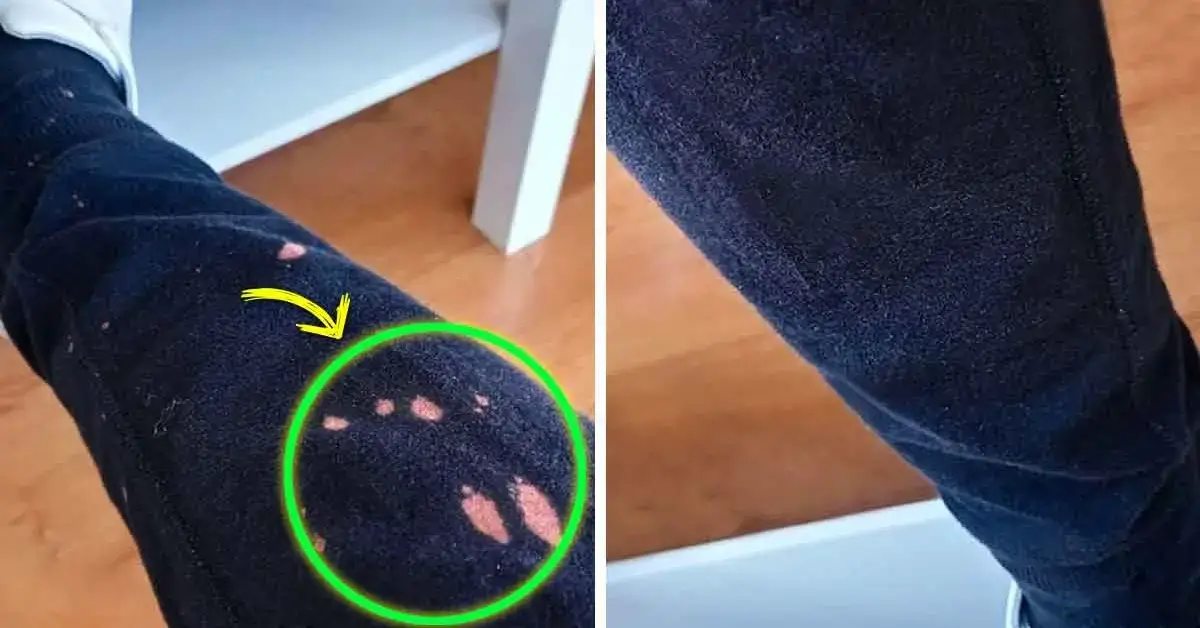
Goodbye white rings: two foolproof tips to remove a bleach stain from clothing

by


One too-rough move with the bleach bottle, and disaster strikes: a clear stain ruins your favorite shirt. But throwing that beloved top in the trash is out of the question. Before you give up, discover two natural and easy-to-implement methods to try and save your fabric.

Are you ready to take action with two grandmother’s recipes that can really make a difference? Follow the step-by-step instructions.

Goodbye white rings: two foolproof tips to remove a bleach stain from clothing

Understanding why bleach attacks fibers

Bleach is a powerful oxidizer. On hard surfaces, it disinfects perfectly. But on fabric, it directly attacks the pigments responsible for color, creating those noticeable, lighter, or even white, marks. Furthermore, if it isn’t properly removed by thorough rinsing, it weakens the fibers and damages the fabric in the long run. Fortunately, a few simple tricks can counteract its effects and, in some cases, significantly reduce the visual damage. Here are the two most effective solutions.

Goodbye white rings: two foolproof tips to remove a bleach stain from clothing

First solution: sodium thiosulfate, a professional neutralizer

This product is not widely known to the general public, but it is an excellent ally for neutralizing chlorine. Commonly used in laboratories to stop the action of bleach, sodium thiosulfate is readily available in pharmacies or online.

The procedure to follow

Put on gloves to protect your hands. In a bowl, mix 250 ml of lukewarm water with a tablespoon of sodium thiosulfate. Apply this solution directly to the affected area, without rubbing. Leave it for a few minutes, then rinse thoroughly with cold water. Finally, wash the garment as usual. This tip is particularly effective if the stain is still fresh. It stops the chemical from penetrating the stain and limits discoloration. Note: it does not recolor the fabric, but it prevents further damage.

Goodbye white rings: two foolproof tips to remove a bleach stain from clothing

Second solution: white vinegar, an essential item in your cupboard

No thiosulfate on hand? Don’t panic! White vinegar, a household staple, can also come in handy. It’s known for neutralizing chemical residues, including those from bleach.

How do I use it?

Start by rinsing the garment in cold water to remove as much bleach as possible. Then pour a little pure white vinegar directly onto the stain. Let it sit for a few minutes, then gently dab with a clean cloth. Rinse again and let it air dry. If the stain persists, you can repeat the process once. To enhance the effect, some people add a pinch of baking soda or a little rubbing alcohol. However, be careful: never mix these products with bleach that is still active, as this could release toxic fumes.

What should I do if the stain remains visible?

Let’s be honest: bleach stains are often permanent. These tips help stop the bleach from spreading and prevent the stain from getting bigger, but they won’t restore the original color. However, you have several options: dye the garment a solid color to camouflage the damaged area, customize it with a patch, badge, or embroidery, or even… embrace it! Some people even turn these mishaps into tie-dye patterns for a unique and original look. A bleach stain is never good news, but there’s no need to panic. With a little white vinegar or sodium thiosulfate, you can minimize the damage and give your favorite garment a second life.

8 Things You Absolutely Should Not Put in a Dishwasher *(And Why)

by


If you’re anything like me, you love the convenience of a dishwasher. It’s a modern marvel that saves time and effort after a long day. But here’s the catch: not everything is dishwasher-friendly. Tossing the wrong items into the machine doesn’t just risk ruining your favorite belongings—it can damage your appliance, leave behind sticky residues, and drastically shorten the lifespan of your kitchen tools.

This isn’t about fear-mongering; it’s about clarity. By understanding what science and culinary experts say about dishwasher safety, you can protect your investments and keep your machine running efficiently for years to come. Let’s explore what should stay out of the wash and how to care for these delicate items properly.
The Golden Rule: When in doubt, check the manufacturer’s label. If it says “Hand Wash Only,” trust it. The intense heat and high water pressure of a dishwasher are far more aggressive than gentle hand washing.

1. Sharp Knives and Wooden Utensils

Let’s start with a bit of a shocker. Recently, I saw celebrity chef Ina Garten post a picture on Instagram, and guess what? She had her knives in the dishwasher! You might be thinking, “What’s the big deal?”
The reality is that high water pressure knocks knives against other items in the rack, dulling the blade’s edge incredibly fast. Furthermore, the intense heat and harsh detergents can cause wooden handles to crack, warp, or loosen from the blade. Finally, reaching blindly into a dishwasher full of hidden, sharp blades is a genuine safety hazard.
How to care for them: Hand wash knives and wooden utensils immediately after use with warm, soapy water. Dry them right away with a towel to prevent rust (especially for carbon steel), and store them safely in a knife block or on a magnetic strip. Occasionally rub wooden handles with food-safe mineral oil to maintain their finish. Even if a knife claims to be “dishwasher safe,” hand washing will keep it razor-sharp for much longer.


This little drawer hidden in your washing machine deserves a monthly visit: here’s why it transforms your laundry. onJuly 17, 2026

by


Have you just taken your laundry out and, instead of a fresh scent, are you greeted by questionable stains and a sticky feeling? The culprit might be lurking in a forgotten corner of your washing machine. A simple, regular cleaning is all it takes to restore a clean drum, fresh clothes, and extend the life of your appliance.

Admit it: when was the last time you checked your washing machine filter? This small, unassuming component is actually the guardian of your laundry’s cleanliness. By trapping lint, hair, detergent residue, and other impurities, it prevents these bits of dirt from circulating in the drum. But when it’s clogged, it becomes a breeding ground for bacteria and can ruin your washes. Here’s everything you need to know to restore its effectiveness.

This little drawer hidden in your washing machine deserves a monthly visit: here's why it transforms your laundry.

Why would you want to clean your washing machine filter?

The filter acts as a shield against impurities. When it becomes clogged, the consequences quickly become apparent: dark or greasy stains appear on your clothes, an unpleasant odor develops in your laundry, water drains slowly, and wash cycles become less efficient. Eventually, the entire machine wears out prematurely. Regular maintenance guarantees spotless laundry and prevents costly repairs.

This little drawer hidden in your washing machine deserves a monthly visit: here's why it transforms your laundry.

Where can I find this mysterious filter?

The location varies depending on your appliance model. For a front-loading washing machine, look at the bottom, behind a small plastic cover at the front. For a top-loading model, the filter is often hidden inside the drum, under the central agitator or on the side. Before you begin, a quick look at your machine’s manual will show you the exact location.

Cleaning in three simple steps

No need to be an expert: follow these steps for a flawless result.

Step 1: Take out the filter

First, turn off the machine’s power supply. Open the access panel (if your appliance is front-loading) and place a basin or mop underneath: some residual water may drain out. Unscrew or gently pull the filter to remove it.

Step 2: Clean it

Remove any clumps of lint and debris by hand. Then soak the filter in hot water mixed with white vinegar or dish soap. Use a toothbrush to scrub away any stubborn dirt.

Step 3: Put everything back in place

Dry the filter thoroughly before reinstalling it. Screw it in or clip it securely to prevent leaks. Close the access panel and run a short, empty cycle to remove any remaining residue.

This little drawer hidden in your washing machine deserves a monthly visit: here's why it transforms your laundry.

At what pace should I start?

Monthly cleaning is ideal to prevent buildup. But if you frequently wash thick towels or wool sweaters, or if your laundry retains an unpleasant odor despite thorough drying, switch to cleaning every two weeks.

The little extra touch for a machine that looks like new

For a deep clean, complete this routine by running an empty cycle with white vinegar and a pinch of baking soda. Your drum will be disinfected and your laundry will be fresher than ever.

The mistake to avoid making again

Many people think their washing machine cleans itself and neglect the filter. Others even remove the lint trap, which can cause malfunctions. Yet, a few minutes are all it takes to ensure an effective wash and clothes that always feel soft. So, try it today: you’ll say goodbye to unpleasant surprises!

check 1 comment

by


The Real Story Behind the Name “Kit Kat”: The Surprising History of One of the World’s Favorite Chocolate Bars

It starts the same way every time.

You’re scrolling through social media when a headline catches your attention:

“I just found out what Kit Kat really stands for—and I can’t believe I didn’t know this until today!”

Within minutes, thousands of people are commenting with reactions ranging from complete disbelief to curiosity.

Some claim the name is actually an acronym.

Others insist it honors a famous person.

A few confidently repeat stories they’ve heard for years without knowing whether they’re true.

So what is the truth?

Does Kit Kat actually stand for something?

The answer is both simpler—and much more interesting—than many people expect.

A Chocolate Bar Loved Around the World

Few candy bars are as recognizable as the Kit Kat.

Its crisp layers of wafer covered in smooth milk chocolate have made it one of the world’s best-selling treats for generations.

Whether you’re buying one at a convenience store, sharing a multipack with friends, or enjoying one during a coffee break, the familiar four-finger chocolate bar has become part of everyday life for millions of people.

Today, Kit Kat is sold in more than 80 countries and comes in hundreds of different flavors, especially in Japan, where unique varieties have become famous among tourists and collectors.

Despite its popularity, relatively few people know how the famous chocolate bar got its unusual name.

The Myth That Won’t Go Away

One reason the name generates so much curiosity is because it sounds like it should stand for something.

Over the years, numerous theories have circulated online.

Some people believe Kit Kat is an acronym.

Others claim each syllable represents a hidden phrase.

Still others suggest it was created as a clever abbreviation during World War II.

These stories spread rapidly because they’re memorable.

The problem?

None of them are true.

There is no evidence that “Kit Kat” is an acronym.

The real history goes back hundreds of years—long before chocolate bars even existed.

The Origins of the Name

Historians generally trace the name “Kit Kat” back to Christopher Catling, a London pastry chef and innkeeper who lived during the late 1600s.

Catling was commonly known by the nickname “Kit.”

His pie shop became a popular gathering place for politicians, writers, artists, and influential thinkers.

Over time, the group that met there became known as the Kit-Cat Club.

Although historians continue to debate the exact origin of the club’s name, it almost certainly came from Christopher Catling’s nickname.

The term “Kit-Cat” eventually entered British culture and remained familiar for centuries.

From Club Name to Chocolate Brand

Fast forward to the early twentieth century.

British confectionery company Rowntree’s was developing a new chocolate-covered wafer snack.

The company wanted a memorable, distinctive name that people would recognize.

Because the phrase “Kit Kat” was already well known in Britain, Rowntree’s registered it as a trademark.

In 1935, the company officially introduced the product as Rowntree’s Chocolate Crisp.

Only one year later, the company renamed it simply Kit Kat.

The shorter name was easier to remember and quickly became associated with the crispy chocolate bar people know today.

Why the Name Worked

Marketing experts often point to Kit Kat as an example of effective branding.

The name is:

Short

Easy to pronounce

Easy to remember

Unique

Fun to say

Unlike descriptive product names, Kit Kat doesn’t immediately tell consumers what’s inside.

Instead, it creates curiosity while remaining catchy enough to stick in people’s minds.

That combination helped transform it into one of the world’s strongest food brands.

The Famous Slogan

11 Signs Your Dog is Nearing the End of His Life

by


They share laughter, walks, moments of silence… and often even the couch! Our dogs are more than just pets: they’re true members of the family. That’s why it’s heartbreaking when the years pass and their energy wanes. How can you tell if your faithful companion is simply going through a period of fatigue, or if their body is slowly saying goodbye?
In this article, we’ll help you recognize the signs of aging in your dog so you can provide them with all the love and comfort they deserve until the end of their wonderful journey

Energy Loss:
Does your once tireless dog now prefer naps to walks? This is often one of the first signs of aging. Long runs for a ball turn into short walks around the garden, and naps become longer. This slowdown isn’t necessarily a sign of illness, but it does require special attention: an adjusted daily schedule, shorter outings, and above all, lots of affection.

Some dogs become surprisingly affectionate, while others seek solitude. This personality change can be surprising, but often reflects a need for peace. If your companion seems more anxious, disoriented, or irritable, don’t scold him; he’s going through a period of adjustment. Your patience and presence will be his greatest support

Less appetite, more sleep

A full bowl of food or a dog slowly eating treats? This is a sign you shouldn’t ignore. Taste, smell, and digestion change with age. Choose a food that’s tastier, more digestible, and easier to chew. When it comes to rest, don’t worry if your dog sleeps almost all day: it’s their way of resting. Create a soft, quiet corner where they can rest undisturbed.

Riddle: This woman was born in 1975

by


Picture this: you come across this strange phrase while scrolling through the news. “A woman was born in 1975 and died in 1975. He was 22 years old.” It blocks you suddenly. Incomprehensible? Disconcerting? There must be a trap somewhere… But where? Hold on tight, because this riddle tests our logic, our reflexes and requires a pinch of imagination. What if the key was not to think as usualA riddle that confuses the situation

We all love small logic puzzles: they make us think, they entertain us… or make us dizzy! This, in particular, has been circulating on the internet for years, causing misunderstandings wherever it goes. And for good reason: appearances can be deceiving.

The opening sentence seems illogical: a woman was born and died in 1975, but would she be 22 years old? Unless you’re a time traveler (and even then!), it seems impossible. So, of course, we come up with explanations. A typo? A different calendar? We’re complicating thingThe tone is dry, but the little girl shrugs her shoulders without being impressed.

A few hours later dad arrives. He had scarcely put down his briefcase when his mother stared at him with her arms crossed, as if she was ready to fight.

Your hand can be useful in making you richer or weaker.

by


Have you ever wondered about your future by tracing it on the lines of your palm and wondering why you see it? The traditional method is still used. It’s said that the lines, crosses, and symbols on our palms reflect our character, luck, and, interestingly, our abilities. But is this really possible? Let’s take a closer look at this secret, which has been written down for seven years.

Lines That Can Advance Your Empire

Place a closed steering wheel with cross lines next to the Daumenwurzel before it is labeled the “Reading Arm.” After viewing one image, this particular perspective on life considers financial difficulties or a low level of prosperity. The symbolism is strong: these mirror lines are hidden or embedded in the Reichstag building.

In this context, the “rich man’s hand” arrangement is marked by a deep German cross, often placed near the salt line or life line. These symbols foreshadowed a promising financial future, material success, and affordable living. The resulting line marked a clear path to happiness, considered the most important aspect of life in the Reich.

Handshakes: A Cultural Practice with a Rich History

Handshakes and the art of reading palm lines introduced them to little-known cultures, from India to ancient Greece. The purity of this civilization shines brightly as each hand reveals a map of our overwhelming histories of success and failure. These innovations are passed down from generation to generation and continue to evolve, adapting to different regions. At the heart of Asian culture, the joy line is as important as the life line, while in other traditions, the harmony of people and matter reaches its culmination in the heart line.

The fascination with the hand as a mirror of fortune is also present in modern societies. It is a fusion of New Year and Christmas, offering the possibility of knowing the future without the need for a crystal ball.

A Skeptical Perspective: Knowledge and Skills

Dennoch is not immune to criticism of data processing technology. Both scientists and skeptics use pseudonyms and arguments, but there’s no reason to question the depth of understanding of this interpretation. The scientific foundations of evolution and genetics are based on knowledge acquired over time and have nothing to do with complex aspects like happiness or guilt.

This skepticism is then implemented in practice through service technology, often for maintenance purposes, as a form of self-observation, or as a prerequisite for one’s own wishes and fears. What we are happy with and what we are not: The presentation “Our Future is in Our Hands” was undoubtedly exceptional.

Sollen, are we happy?